
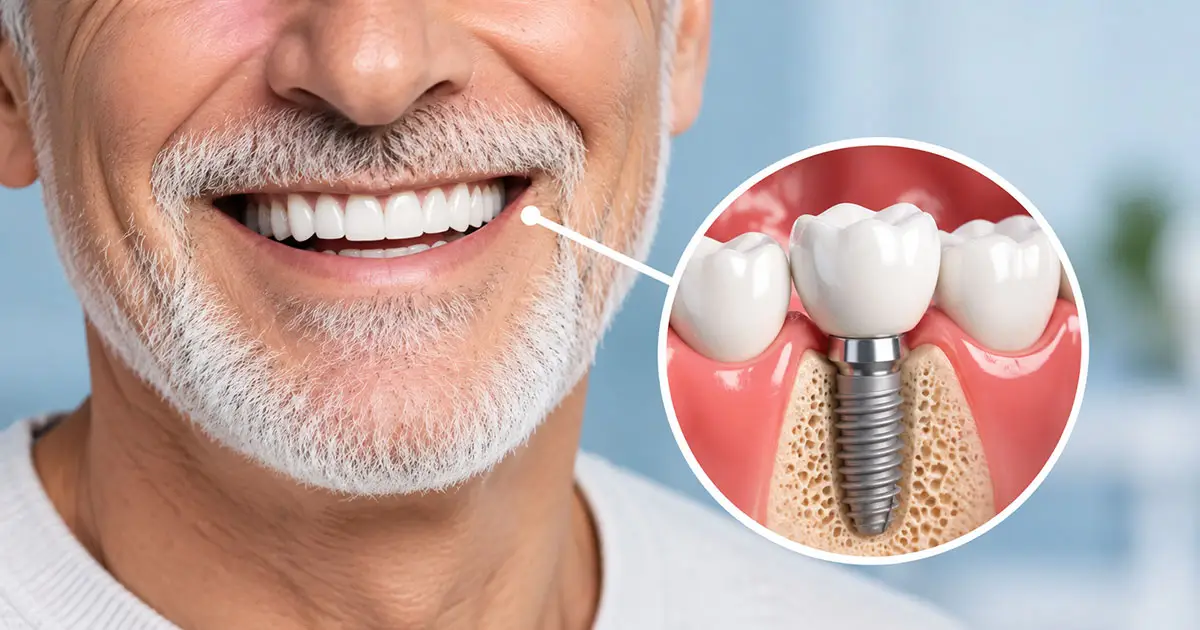
Replacing one missing tooth does not always require a bridge. A single dental implant can serve as an artificial root and support an individual crown. For many patients, this creates a replacement that is independent of the neighboring teeth. The decision still requires an examination of the bone, gums, bite, and overall dental health.
Dental implants are designed to replace the root portion of a missing tooth and provide support for a crown, bridge, or denture. Unlike a traditional removable denture, an implant is anchored in the jawbone. The treatment is planned around the patient’s oral health, available bone, remaining teeth, bite, aesthetic goals, and overall health. Because implant treatment is surgical, an examination and individualized treatment plan are essential before a dentist can determine whether implants are appropriate.
Why Replace a Single Missing Tooth?
A single missing tooth can affect more than appearance. Depending on its location, the gap may change chewing, speech, or how the surrounding teeth contact each other. A single implant is designed to replace the missing tooth root without requiring the neighboring teeth to serve as bridge supports. The visible restoration is usually a custom crown. Whether an implant is the best option depends on the health of the surrounding teeth, bone volume, gum condition, bite, and the patient’s preferences and clinical circumstances.
How a Single Tooth Implant Works
The treatment has three basic components: the implant body, the abutment, and the crown. The implant body is placed in the jawbone and acts as the artificial root. After the site heals and the implant integrates with the bone, an abutment connects the implant to the crown. The crown is custom designed for shape, shade, contact points, and bite. In some cases the abutment and implant may be planned together as part of a specific restorative system.
Single Tooth Implant Candidacy
A dentist evaluates the missing-tooth site and the patient as a whole. Adequate bone is helpful for stable placement, but bone deficiencies can sometimes be addressed with grafting. Healthy gums and good oral hygiene are important because inflammation around an implant can threaten the supporting tissues. The dentist will also consider active decay, periodontal disease, smoking, medical conditions that affect healing, and the position of the nerves or sinus. Imaging helps determine whether the proposed implant position is practical and safe.
Single Implant vs. Traditional Bridge
A traditional bridge replaces a missing tooth by using adjacent teeth as supports. An implant-supported crown instead uses an implant in the missing-tooth site. The two approaches involve different procedures, costs, timelines, maintenance requirements, and risks. A bridge may be appropriate in some situations, particularly when neighboring teeth already need crowns. An implant may be considered when the adjacent teeth are healthy and the patient wants a replacement that does not rely on those teeth for support. Your dentist can compare both options using your specific anatomy and restorative needs.
What Happens After Implant Placement?
Immediately after placement, the implant may not be ready to carry the final crown. The site needs time to heal, and the implant must become sufficiently integrated with the surrounding bone. A temporary tooth may sometimes be used for appearance or function, depending on the location and stability of the implant. During healing, patients are typically given instructions about food, brushing, activity, and follow-up. The final crown is fabricated after the dental team confirms that the implant and surrounding tissues are ready.
Caring for a Single Tooth Implant
A single implant still needs daily cleaning. Brush around the crown and gumline, clean between teeth using the method recommended by your dental team, and attend regular dental examinations. Your dentist may monitor the implant, neighboring teeth, bite, and supporting tissues. If the crown feels loose, the bite suddenly changes, or you develop persistent swelling, bleeding, pain, or other unusual symptoms, contact the dental office rather than waiting for the next routine visit.
Questions to Ask Before Treatment
Ask whether the neighboring teeth are healthy enough that an implant is preferable to a bridge, whether you need bone grafting, what type of crown material is planned, how long healing is expected to take, and what temporary tooth—if any—will be used. Also ask about the implant manufacturer and model, the restorative components, maintenance appointments, and what is included in the treatment estimate. Clear answers make it easier to understand the complete treatment rather than focusing only on the implant placement fee.
Protecting the Neighboring Teeth
One advantage of an implant-supported crown is that the replacement tooth can be supported independently rather than using the neighboring teeth as bridge abutments. That does not mean the surrounding teeth can be ignored. They still need normal brushing, interdental cleaning, professional examinations, and treatment when disease is present. The implant plan should be considered as part of the entire mouth. A healthy bite and healthy neighboring teeth can make long-term maintenance easier, while untreated dental disease elsewhere can complicate the overall treatment plan.
The Role of the Temporary Tooth
Depending on the location and stability of the implant, a temporary tooth may be used while the implant heals. A temporary restoration can help maintain appearance, but it may have functional limitations and should be used according to the dentist’s instructions. The final crown is made after the implant and surrounding tissues are ready. Patients should ask whether the temporary tooth is included in the treatment plan, how long it is expected to be worn, and what to do if it becomes loose or damaged.
Planning the Implant Position
For a single missing tooth, the implant position has to work with the neighboring roots, available bone, gum tissues, and the final crown. The dentist is not simply filling an empty space. The three-dimensional position can influence the appearance of the gumline, the ability to clean around the crown, and the way forces are transferred to the implant. This is why diagnostic imaging and restorative planning are important. The final crown should be considered before the implant is placed because the surgical and restorative stages need to work together.
Patient Checklist Before Treatment
Compare an implant crown with a traditional bridge.
Ask whether the neighboring teeth need treatment.
Confirm the expected healing timeline.
Ask what crown material is recommended and why.
Discuss temporary tooth options during healing.
Planning Dental Implant Treatment in Florida
A Florida implant consultation normally begins with a review of your dental history, an examination of the gums and remaining teeth, and diagnostic imaging when indicated. The clinician may evaluate bone volume, the position of important anatomical structures, the condition of any existing restorations, and signs of gum disease or infection. The final plan can range from a single implant and crown to an implant-supported bridge, removable overdenture, or full-arch restoration. The number of implants and the timing of each stage should be based on the specific anatomy and restorative design rather than a one-size-fits-all formula.
For patients researching dental implants in Florida, location matters for practical reasons: the treatment may involve multiple visits, healing appointments, restorative records, and long-term maintenance. Whether you live in South Florida, Central Florida, North Florida, or elsewhere in the state, look for a practice that explains the complete treatment sequence, the implant system being used, the restorative material, expected healing periods, alternatives, risks, and maintenance requirements. A consultation should give you enough information to understand what is being proposed before you decide to proceed.
Long-Term Care Matters
Long-term implant care is still dental care. Implants cannot develop cavities in the same way natural teeth do, but the tissues around implants can become inflamed or infected, and prosthetic components can wear or loosen. Daily cleaning, professional examinations, and attention to changes such as bleeding, swelling, discomfort, looseness, or difficulty chewing are important. Smoking can interfere with healing, and conditions that affect healing may need to be managed before surgery. Patients should follow the cleaning and follow-up schedule provided by their dental team.
How This Option Fits With Other Implant Treatments
The right implant solution depends on what needs to be replaced. A single missing tooth may be treated with one implant and a crown. Several adjacent missing teeth may be candidates for an implant-supported bridge. Patients who have lost many or all teeth may be considered for an implant-supported denture or fixed full-arch restoration. These options are not interchangeable, and the appropriate design depends on bone anatomy, remaining teeth, hygiene ability, bite, aesthetics, budget, and the clinical findings from an examination.