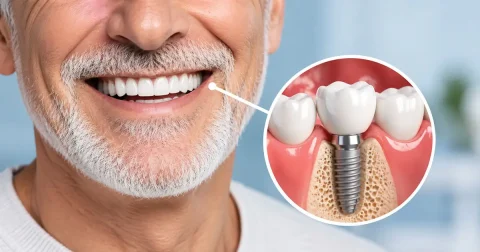


Loose or uncomfortable dentures are a common reason patients investigate implant-supported dentures. By anchoring a denture to implants, the treatment can provide additional retention and stability compared with a conventional denture. The design may be removable or fixed, so understanding the terminology is important before choosing a treatment plan.
Dental implants are designed to replace the root portion of a missing tooth and provide support for a crown, bridge, or denture. Unlike a traditional removable denture, an implant is anchored in the jawbone. The treatment is planned around the patient’s oral health, available bone, remaining teeth, bite, aesthetic goals, and overall health. Because implant treatment is surgical, an examination and individualized treatment plan are essential before a dentist can determine whether implants are appropriate.
What Are Implant-Supported Dentures?
Implant-supported dentures use dental implants to provide attachment and stability for a denture. Instead of relying entirely on the gums for support, the prosthesis connects to implants placed in the jaw. Some designs are removable by the patient for cleaning, while other full-arch restorations are designed to remain fixed and are removed only by the dental professional. The exact design, number of implants, attachment system, and denture material depend on the anatomy and restorative plan.
Why Patients Consider Implant Dentures
Traditional dentures can move during chewing or speaking, especially when the lower jaw has limited support. Implant retention can improve stability for appropriately selected patients. An implant-supported removable denture can also be taken out for hygiene, while a fixed full-arch prosthesis offers a different experience and maintenance routine. Patients should understand that implant dentures are still prosthetic teeth and require professional maintenance, periodic adjustment, and replacement of worn components over time.
Removable vs. Fixed Implant-Supported Teeth
A removable overdenture is designed to be removed by the patient, usually for cleaning and while sleeping according to the dentist’s instructions. It attaches to implants using an attachment system. A fixed full-arch restoration is secured to implants and is intended to remain in the mouth. The fixed design can provide a highly stable tooth replacement, but cleaning underneath and around the prosthesis requires specific techniques. The best choice depends on anatomy, hygiene ability, desired function, restorative goals, and budget.
How Many Implants Are Needed?
There is no universal implant count for every denture patient. Some lower removable overdentures may use a small number of implants, while fixed full-arch designs can require a different configuration. Upper and lower jaws also have different anatomy and bone characteristics. The dentist chooses the implant number and positions based on available bone, prosthetic design, bite, force distribution, and long-term maintenance. A consultation should explain why a particular configuration is being recommended instead of presenting a single number as appropriate for everyone.
The Treatment Process
Treatment begins with an evaluation of your existing denture, gums, jawbone, bite, and goals. Diagnostic imaging may be used to plan implant positions. If teeth remain, extraction may be part of the treatment. Implants are placed surgically, followed by a healing period when needed. Depending on stability and the treatment plan, a temporary or provisional prosthesis may be provided. After healing and clinical checks, the final denture is fabricated and adjusted. Follow-up visits help ensure that the implants and prosthesis remain healthy and functional.
Caring for Implant-Supported Dentures
Removable implant dentures should be removed and cleaned as instructed, and the implants and attachment areas need daily attention. Fixed restorations require cleaning beneath and around the prosthesis using tools recommended by the dental team. Professional visits are important because the clinician can check implant stability, gum tissues, bite, attachments, and prosthetic wear. Do not ignore persistent bleeding, swelling, pain, odor, looseness, or a sudden change in the way the prosthesis fits.
Is an Implant Denture Right for You?
Implant-supported dentures may be considered when conventional dentures are unstable, uncomfortable, or difficult to use. They may also be an option after extensive tooth loss. However, surgery is required and some patients need preliminary treatment such as extraction, periodontal care, or bone grafting. A complete consultation should compare an implant-supported removable denture with a fixed full-arch restoration and conventional dentures, including expected maintenance, cost, surgical requirements, and long-term care.
Eating and Speaking With Implant Dentures
Patients often want to know whether they will immediately eat normally after receiving implant-supported dentures. Function usually improves gradually as the patient adapts and the dental team makes necessary adjustments. Early dietary instructions are designed to protect healing implants and tissues. Speech can also require a short adaptation period because tooth position and the shape of the prosthesis affect tongue movement. Follow-up adjustments are normal and can help improve comfort, chewing, speech, and the fit of the prosthesis.
What Happens to the Denture You Already Have?
If you already wear dentures, bring them to the consultation. The dentist can evaluate their fit, tooth position, vertical dimension, and condition and determine whether the existing prosthesis can be modified temporarily or whether a new prosthesis is needed. In some treatment plans, the existing denture may help guide the design of a temporary solution. In others, a new implant-supported prosthesis is fabricated. The transition should be discussed before surgery so you know what you will wear during the healing period.
Implant Retention and Denture Stability
A conventional denture rests on the oral tissues, while an implant-supported denture uses implants to provide attachment and retention. The improvement in stability can be particularly meaningful for patients who struggle with denture movement during speaking or chewing. The exact amount of stability depends on the implant positions, attachment components, denture design, jaw anatomy, and maintenance. Implant retention does not make the prosthesis immune to wear. Attachments can require replacement or adjustment, and the denture itself may eventually need a reline, repair, or replacement.
Patient Checklist Before Treatment
Confirm whether the denture is removable or fixed.
Ask how many implants are planned and why.
Learn the cleaning routine for the attachments and prosthesis.
Ask about relines, repairs, and replacement of worn components.
Discuss alternatives and long-term maintenance.
Planning Dental Implant Treatment in Florida
A Florida implant consultation normally begins with a review of your dental history, an examination of the gums and remaining teeth, and diagnostic imaging when indicated. The clinician may evaluate bone volume, the position of important anatomical structures, the condition of any existing restorations, and signs of gum disease or infection. The final plan can range from a single implant and crown to an implant-supported bridge, removable overdenture, or full-arch restoration. The number of implants and the timing of each stage should be based on the specific anatomy and restorative design rather than a one-size-fits-all formula.
For patients researching dental implants in Florida, location matters for practical reasons: the treatment may involve multiple visits, healing appointments, restorative records, and long-term maintenance. Whether you live in South Florida, Central Florida, North Florida, or elsewhere in the state, look for a practice that explains the complete treatment sequence, the implant system being used, the restorative material, expected healing periods, alternatives, risks, and maintenance requirements. A consultation should give you enough information to understand what is being proposed before you decide to proceed.
Long-Term Care Matters
Long-term implant care is still dental care. Implants cannot develop cavities in the same way natural teeth do, but the tissues around implants can become inflamed or infected, and prosthetic components can wear or loosen. Daily cleaning, professional examinations, and attention to changes such as bleeding, swelling, discomfort, looseness, or difficulty chewing are important. Smoking can interfere with healing, and conditions that affect healing may need to be managed before surgery. Patients should follow the cleaning and follow-up schedule provided by their dental team.
How This Option Fits With Other Implant Treatments
The right implant solution depends on what needs to be replaced. A single missing tooth may be treated with one implant and a crown. Several adjacent missing teeth may be candidates for an implant-supported bridge. Patients who have lost many or all teeth may be considered for an implant-supported denture or fixed full-arch restoration. These options are not interchangeable, and the appropriate design depends on bone anatomy, remaining teeth, hygiene ability, bite, aesthetics, budget, and the clinical findings from an examination.